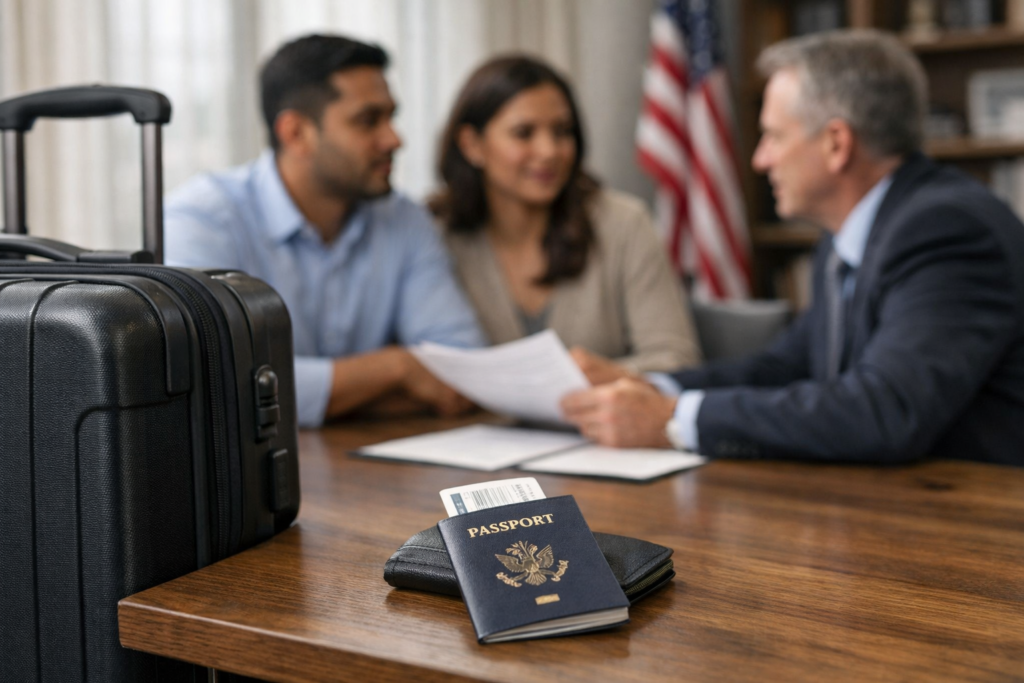
Becoming a U.S. citizen takes time. The citizenship 5-year rule is the main path. You need five years as a green card holder. Then, you can apply for naturalization. This guide explains every step.
You will learn the citizenship 5-year rule clearly. We cover the 3-year rule for spouses too. Both paths lead to U.S. citizenship. So, understanding each rule helps you plan better.
Hector Herrera leads our immigration law team. He has helped thousands through naturalization. Our firm uses clear steps and proven methods. As a result, clients feel confident about citizenship.
Table of Contents
- What Is the Citizenship 5-Year Rule?
- How the 3-Year Rule Works for Married Green Card Holders
- Naturalization Residency Requirement Explained
- Step-by-Step Process to Apply for U.S. Citizenship
- Common Mistakes That Delay Citizenship Applications
- Frequently Asked Questions
What Is the Citizenship 5-Year Rule?
The citizenship 5-year rule is simple. You must hold a green card for five years. Then, you can file Form N-400 for naturalization. This rule applies to most green card holders. So, understanding this naturalization residency requirement matters.
USCIS counts your time from the day you got your green card. The citizenship 5-year rule starts on that date. You cannot apply early without meeting this requirement. Also, you must live in the U.S. during this time.
Why the Five-Year Period Exists
Congress created the citizenship 5-year rule for good reasons. It gives green card holders time to adjust. Naturalization means you understand U.S. values and laws. Because of this, the five-year period ensures readiness.
Many people wonder if they can skip steps. The answer is no for most cases. Citizenship requires patience and proper naturalization residency requirement planning. Yet, some exceptions exist for special groups.
Who Qualifies Under the 5-Year Rule
Most green card holders use the citizenship 5-year rule. This includes employment-based green cards and family-based cards. So, if you got your green card through work, this rule applies. The same goes for most family sponsorships.
You must also meet other naturalization requirements. These include good moral character and English skills. Plus, you need to pass the civics test. The USCIS study materials page helps you prepare for the citizenship exam.
Exceptions to the Standard Waiting Period
Some green card holders qualify for faster citizenship. Military members can apply without waiting five years. Also, people married to U.S. citizens have a shorter path. These exceptions reduce the naturalization residency requirement time.
The 3-year rule citizenship marriage path is common. It lets spouses of citizens apply earlier. So, being married to a U.S. citizen changes your timeline. We explain this rule in the next section.
Expert Insight from Hector Herrera, Immigration Attorney:
“The citizenship 5-year rule is clear. But many people miss small details. Each case is different. So, reviewing your file early prevents delays.”
How the 3-Year Rule Works for Married Green Card Holders
The 3-year rule citizenship marriage path is shorter. If you are married to a U.S. citizen, you can apply after three years. This naturalization residency requirement benefits many spouses. So, understanding this citizenship rule saves you time.
You must meet specific conditions for the 3-year rule. Your spouse must be a U.S. citizen for three years. Also, you must stay married during this period. Plus, you must live together as a married couple.
Requirements for the 3-Year Citizenship Rule
First, you need a green card through your U.S. citizen spouse. The 3-year rule citizenship marriage path requires this connection. Second, your spouse must remain a citizen the entire time. Third, you must live together continuously.
USCIS checks your marriage carefully during naturalization. They want to ensure it is real. Because of this, you must show proof of your relationship. Documents like joint tax returns help your citizenship case.
Calculating Your Eligibility Date
Counting the three years starts when you get your green card. The 3-year rule citizenship marriage path uses this date. So, if you got your card on January 1, 2023, you can apply around October 1, 2025. You can file 90 days early.
Many people apply exactly 90 days before their three-year date. This is allowed under naturalization rules. Also, filing early does not hurt your citizenship case. In fact, it helps you avoid delays.
Common Issues with the 3-Year Rule
Some couples face problems with the 3-year rule citizenship marriage path. Separation can affect your naturalization residency requirement. If you live apart, USCIS may deny your citizenship application. So, maintaining a shared home is important.
Divorce also impacts your eligibility. If your marriage ends before naturalization approval, you lose the 3-year rule benefit. Then, you must use the citizenship 5-year rule instead. Our citizenship services page explains more about these scenarios.
Documentation You Need for Marriage-Based Citizenship
Gather documents early for your 3-year rule citizenship marriage application. You need your marriage certificate and spouse’s citizenship proof. Also, bring joint bank statements and lease agreements. These prove your naturalization residency requirement.
Photos together help show your relationship is real. Plus, affidavits from friends support your citizenship case. The more evidence you have, the better. So, start collecting documents now.
Naturalization Residency Requirement Explained
The naturalization residency requirement goes beyond just time. You must physically live in the U.S. for certain periods. USCIS counts days very carefully for citizenship. So, understanding these rules prevents naturalization problems.
Physical presence means actual time inside the United States. The citizenship 5-year rule requires 30 months of physical presence. For the 3-year rule citizenship marriage path, you need 18 months. These are minimum requirements for naturalization.
Physical Presence vs. Continuous Residence
Continuous residence is different from physical presence. Continuous residence means you did not abandon your green card status. Physical presence counts actual days in the U.S. Both matter for citizenship and naturalization.
Trips outside the U.S. affect your naturalization residency requirement. Short trips are fine for citizenship. But long trips can break continuous residence. So, plan your travel carefully before applying for naturalization.
How Absences Impact Your Citizenship Timeline
Any trip over six months raises questions. USCIS may think you abandoned residence for citizenship purposes. Trips over one year almost always break continuous residence. Then, your citizenship 5-year rule starts over.
Keep records of all trips abroad. This helps prove your naturalization residency requirement. Save boarding passes and passport stamps for citizenship documentation. Also, note the reason for each trip.
State Residency Requirements for Naturalization
You must live in one state for three months before applying. This is part of the naturalization residency requirement. USCIS wants you to apply in your home state. So, moving states can delay your citizenship application.
If you move, wait three months in your new state. Then, file your citizenship application there. Also, update your address with USCIS immediately. This keeps your naturalization case on track.
Special Rules for Military Members
Military service changes the naturalization residency requirement. Active duty members can apply without the citizenship 5-year rule. Some can apply after just one year of service. Also, they may not need physical presence time.
Veterans receive benefits too for citizenship. If you served during wartime, special naturalization rules apply. The USCIS military naturalization page explains these citizenship benefits. So, check if you qualify for faster naturalization.
Expert Insight from Hector Herrera, Immigration Attorney:
“Many clients worry about short trips abroad. Most travel is fine for citizenship. But trips over 180 days need careful planning. Always document your naturalization residency requirement.”
Step-by-Step Process to Apply for U.S. Citizenship
Applying for citizenship involves clear steps. Following them in order helps your naturalization succeed. So, use this guide to plan your citizenship 5-year rule application. Each step matters for naturalization approval.
Complete Process Overview
The citizenship process has ten main steps. You start by checking eligibility for naturalization. Then, you gather documents and file Form N-400. After that, USCIS reviews your citizenship application. Finally, you attend your interview and take the oath.
Most people complete naturalization in 8 to 12 months. Some cases take longer for citizenship. So, starting early helps you meet your citizenship 5-year rule deadline. Also, careful preparation speeds up naturalization.
Detailed Step-by-Step Guide
- Check your eligibility date. Use the citizenship 5-year rule or 3-year rule citizenship marriage timeline. Count from your green card date. Then, subtract 90 days to find your earliest filing date for naturalization.
- Gather required documents. You need your green card copy, tax returns, and travel records. Also, collect proof of marriage if using the 3-year rule citizenship marriage path. These documents support your naturalization residency requirement.
- Complete Form N-400. This is the citizenship application form. Fill it out carefully for naturalization. Answer every question truthfully. Also, sign and date the form properly.
- Calculate and pay the filing fee. The citizenship fee is $710 total as of 2026. This includes $640 for naturalization processing and $70 for biometrics. Some people qualify for fee waivers for citizenship applications.
- Submit your application package. Mail Form N-400 to the correct USCIS address. Include all documents and payment for citizenship. Also, make copies of everything before mailing for naturalization records.
- Attend your biometrics appointment. USCIS will send you a notice for this citizenship step. Go to the appointment on time for naturalization processing. They will take your fingerprints and photo.
- Prepare for the citizenship interview. Study the 100 civics questions for naturalization. Practice English reading and writing too. Also, review your Form N-400 carefully before the citizenship interview.
- Attend your naturalization interview. Bring all original documents to this citizenship appointment. An officer will test your English and civics knowledge. Also, they will review your Form N-400 for naturalization approval.
- Receive your decision. USCIS may approve, continue, or deny your citizenship application. Most cases get approved at the interview for naturalization. If continued, provide any requested documents quickly.
- Take the Oath of Allegiance. This is the final step to citizenship. You will receive a ceremony notice for naturalization completion. Attend the ceremony and take the oath. Then, you become a U.S. citizen.
Important Forms and Documents
Form N-400 is the main citizenship application. You can download it from USCIS for naturalization. Also, gather supporting documents like your green card. Tax returns prove your naturalization residency requirement.
Passport-style photos are needed for citizenship. Bring two photos to your interview. Also, have originals of all documents you submitted. This speeds up naturalization approval.
Timeline and Processing Times
Processing times vary by location for citizenship. Most cases take 8 to 12 months for naturalization. Some offices are faster for citizenship applications. Check the USCIS processing times tool for your area’s naturalization timeline.
You can help speed up your citizenship case. Respond quickly to any USCIS requests. Also, attend all appointments on time for naturalization. Our immigration services include citizenship application support.
Common Mistakes That Delay Citizenship Applications
Many citizenship applications face delays. Often, simple mistakes cause naturalization problems. So, avoiding these errors helps your citizenship 5-year rule case succeed. Learn what to watch for in naturalization.
Filing Too Early
Filing before your eligibility date causes citizenship rejection. You can apply 90 days early maximum for naturalization. But some people file 100 or 120 days early. Then, USCIS rejects the citizenship application completely.
Calculate your date carefully using the citizenship 5-year rule or 3-year rule citizenship marriage timeline. Mark your calendar for the 90-day window. Also, double-check your math before mailing your naturalization application.
Incomplete or Incorrect Forms
Form N-400 must be complete for citizenship. Missing information delays naturalization processing. Also, wrong answers can lead to citizenship denial. So, review every section before submitting your naturalization application.
Common errors include missing signatures and blank fields. Also, people forget to include the filing fee for citizenship. These mistakes cause USCIS to reject your naturalization application. Then, you must refile and wait longer for citizenship.
Missing Supporting Documents
Your citizenship application needs proper documentation. Tax returns prove your naturalization residency requirement. Also, travel records show your physical presence. Missing documents delay citizenship processing.
Make a checklist of required documents for naturalization. Gather everything before filing your citizenship application. Also, make copies of all materials. This helps if USCIS loses something from your naturalization file.
Failing the English or Civics Test
The naturalization test has two parts. You must pass English and civics for citizenship. Some people do not study enough for naturalization. Then, they fail the citizenship test.
If you fail, USCIS gives one more chance for naturalization. You can retake the citizenship test within 60 to 90 days. But failing twice means your naturalization application is denied. So, prepare well before your citizenship interview.
Not Disclosing Criminal History
You must report all arrests on Form N-400 for citizenship. Even dismissed charges matter for naturalization. Hiding criminal history causes serious citizenship problems. USCIS will discover it during background checks for naturalization.
If you have arrests, explain them on your citizenship application. Provide court documents for naturalization review. Also, consult an attorney about how this affects your citizenship case. Honesty is critical for naturalization approval.
Address Changes Without Updates
Moving during the citizenship process requires updates. You must tell USCIS your new address within 10 days. Not updating causes missed naturalization notices. Then, USCIS may deny your citizenship application.
Use Form AR-11 to report address changes. Also, update your address online at USCIS. This keeps your citizenship case active. Plus, you will receive all naturalization notices at the right place.
Expert Insight from Hector Herrera, Immigration Attorney:
“Most citizenship delays come from small mistakes. Review everything twice before filing for naturalization. Also, keep copies of all documents. This makes fixing problems easier for citizenship.”
Frequently Asked Questions
What is the citizenship 5-year rule?
The citizenship 5-year rule means you need five years as a green card holder. Then, you can apply for naturalization using Form N-400. This rule applies to most people seeking citizenship. Also, you must meet residency and physical presence requirements for naturalization approval.
How does the 3-year rule citizenship marriage path work?
The 3-year rule citizenship marriage path is shorter. You can apply after three years if married to a U.S. citizen. Your spouse must stay a citizen during this time for naturalization. Also, you must live together to qualify for citizenship under this rule.
Can I travel while waiting for citizenship approval?
Yes, you can travel during naturalization processing. But avoid trips over six months for citizenship purposes. Long absences may hurt your residency requirement for naturalization. Keep records of all trips to prove your citizenship case stays valid.
What happens if I fail the citizenship test?
If you fail the naturalization test, you get one more chance. USCIS schedules a retest within 60 to 90 days for citizenship. Failing twice means your naturalization application is denied. Then, you must reapply and pay fees again for citizenship.
How much does the citizenship application cost?
The citizenship fee is $710 as of 2026. This includes $640 for Form N-400 and $70 for biometrics. Some people qualify for fee waivers for naturalization. Check USCIS guidelines to see if you qualify for reduced citizenship costs.
Quick Reference: Citizenship 5-Year Rule Definition
The citizenship 5-year rule is a naturalization residency requirement. It states that most green card holders must wait five years before applying for citizenship. During this time, you must maintain continuous residence in the U.S. and meet physical presence requirements. The rule ensures that naturalization applicants have sufficient time to demonstrate good moral character, learn English, and understand U.S. civics. Spouses of U.S. citizens may qualify for the 3-year rule citizenship marriage path instead. Both paths lead to the same naturalization process and citizenship benefits. USCIS strictly enforces these residency timelines for all citizenship applications.
Take the Next Step Toward U.S. Citizenship
You now understand the citizenship 5-year rule and 3-year rule citizenship marriage paths. Both lead to naturalization when you follow the steps. So, start planning your citizenship application today. Check your eligibility date first for naturalization.
Gather your documents early for the citizenship process. Review Form N-400 carefully before filing. Also, study for the naturalization test now. These steps help you succeed in becoming a citizen.
Many people need help with citizenship applications. The naturalization process has complex rules. So, working with an attorney protects your citizenship case. Our team knows the citizenship 5-year rule inside and out.
Contact our office for a citizenship consultation. We review your case and explain your naturalization options. Also, we help you avoid common citizenship mistakes. Start your path to U.S. citizenship with confidence today.
Comments are closed.