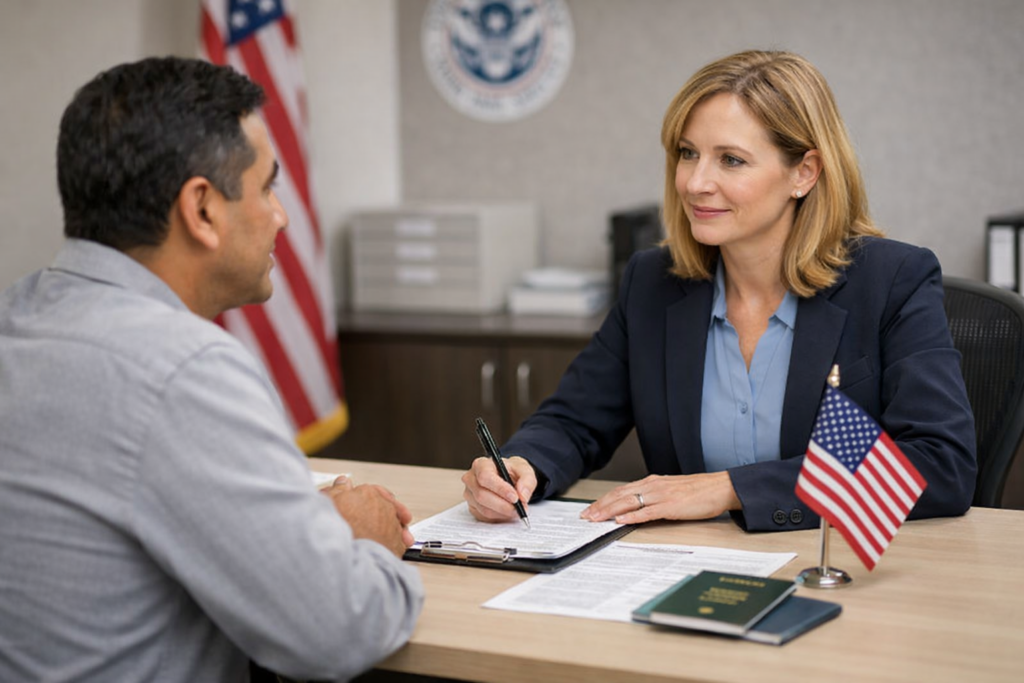
Your U.S. citizenship interview day is here. You walk into the USCIS office. Your heart races a bit. What happens next can change your life forever.
The citizenship interview tests your English and civics knowledge. It also reviews your N-400 application. USCIS officers check if you meet all naturalization requirements. Most people pass, but preparation makes the difference.
This guide walks you through every step of the U.S. citizenship interview process. You will learn what to bring, what questions to expect, and how to prepare. With nearly two decades of experience helping thousands of immigrants achieve citizenship, Herrera Law Firm knows what works. Let’s get you ready.
Table of Contents
- What Is the U.S. Citizenship Interview?
- Before Your Citizenship Interview: What to Bring
- Step-by-Step: What Happens During the Interview
- The English Test at Your Citizenship Interview
- The Civics Test: 100 Questions You Should Know
- How USCIS Reviews Your N-400 Application
- After Your Citizenship Interview: What Comes Next
- Common Mistakes That Delay Citizenship Approval
- Quick Reference: Citizenship Interview Definition
- 10-Step Citizenship Interview Process
- Frequently Asked Questions
What Is the U.S. Citizenship Interview?
The U.S. citizenship interview is a required meeting with a USCIS officer. It happens after you file Form N-400. The interview determines if you qualify for naturalization.
During this citizenship interview, three main things happen. First, you take an English test. Second, you take a civics test. Third, the officer reviews your naturalization application under oath.
The citizenship interview usually lasts 20 to 30 minutes. Most interviews happen at your local USCIS field office. You receive a notice with your interview date and time about 2 to 4 weeks before.
Why the Citizenship Interview Matters
This interview is your final step before becoming a U.S. citizen. USCIS uses it to verify your eligibility. They check your continuous residence, physical presence, and good moral character.
The naturalization interview also confirms you understand English and U.S. civics. These requirements show you can integrate into American society. The interview officer makes the decision about your citizenship application.
Most applicants pass their citizenship interview on the first try. Proper preparation is key. Knowing what to expect reduces stress and increases success.
Who Needs a Citizenship Interview
All naturalization applicants must attend a citizenship interview. This includes those applying through marriage to a U.S. citizen. It also includes those applying after five years as a green card holder.
Some exceptions exist for very elderly applicants. Some disability exemptions apply too. But most people go through the standard citizenship interview process.
The USCIS naturalization interview guide provides official details. Review it early in your preparation.
Expert Insight from Hector Herrera, Immigration Attorney:
“Most citizenship interview failures happen from poor preparation. Know your N-400 answers cold. Practice the civics questions daily. Arrive early with all documents.”
Before Your Citizenship Interview: What to Bring
Preparation starts weeks before your citizenship interview date. Gathering the right documents is crucial. Missing paperwork can delay your naturalization process.
Your interview notice lists required documents. Read it carefully. Bring originals and copies of everything. USCIS keeps copies and returns originals.
Essential Documents for Your Citizenship Interview
Every citizenship interview requires these core documents. Bring your green card. Bring your state ID or driver’s license. Bring your passport from your home country.
Also bring your interview notice. This confirms your appointment. Bring any documents that support your N-400 application. This includes marriage certificates, divorce decrees, or birth certificates.
If you traveled outside the U.S., bring travel records. If you changed your name, bring legal name change documents. If you have children, bring their birth certificates.
Additional Documents Based on Your Situation
Your citizenship interview requirements vary by circumstance. Marriage-based applicants bring proof of the marriage. This includes joint bank statements, lease agreements, and photos together.
Military applicants bring discharge papers. Business owners bring tax returns. Anyone with arrests brings court documents showing case outcomes.
The key is proving every claim on your N-400 form. If you listed something, bring proof. If you’re unsure, bring it anyway. Extra documents never hurt.
How to Organize Your Citizenship Interview Documents
Organization shows respect and preparation. Use a folder or binder. Separate documents by category. Label each section clearly.
Place your interview notice on top. Put your green card and ID next. Then add supporting documents in logical order. This makes the naturalization interview smoother.
Make copies of everything before your citizenship interview. Keep one set at home. Bring one set with you. This protects you if documents get lost.
Many applicants find help from experienced citizenship lawyers when organizing documents. Professional guidance prevents missing critical paperwork.
Step-by-Step: What Happens During the Interview
Understanding the citizenship interview flow reduces anxiety. Each interview follows a similar pattern. Knowing what comes next helps you stay calm and focused.
The naturalization interview begins when the officer calls your name. You walk to their office. They ask you to raise your right hand and swear to tell the truth.
The Oath and Initial Questions
Your citizenship interview starts with the oath. This is serious. Everything you say is under oath. Lying can result in denial and deportation proceedings.
After the oath, the officer checks your identity. They verify your name, address, and date of birth. They confirm you brought required documents. This takes about 2 to 3 minutes.
The officer then explains the interview process. They tell you about the English test, civics test, and N-400 review. They may ask if you have questions.
The English and Civics Tests
Next comes the English portion of your citizenship interview. The officer tests your speaking, reading, and writing skills. We cover this in detail in the next section.
After the English test, you take the civics test. The officer asks up to 10 questions about U.S. history and government. You must answer 6 correctly to pass. This naturalization test is usually easier than people expect.
The N-400 Application Review
The final part of your citizenship interview is the N-400 review. The officer goes through your application page by page. They ask about your answers. They look for inconsistencies or concerns.
This is where honesty matters most. If something changed since filing, tell the officer. If you made a mistake on the form, correct it now. The naturalization interview is your chance to clarify anything.
The officer may ask about your trips abroad. They check if you maintained continuous residence. They verify you have good moral character. They confirm you support the U.S. Constitution.
What Happens at the End of Your Citizenship Interview
Most officers tell you the result immediately. They either approve, continue, or deny your citizenship application. Approval means you pass to the oath ceremony. Continuation means they need more documents or information.
Denial is rare but possible. If denied, you receive a written explanation. You have the right to appeal. Most denials result from fraud, criminal issues, or missing eligibility requirements.
The entire citizenship interview takes 20 to 30 minutes. Some complex cases take longer. Most people leave knowing their result. This is the moment years of preparation come together.
The English Test at Your Citizenship Interview
The English test is part of every citizenship interview. It has three components: speaking, reading, and writing. You must pass all three to continue your naturalization process.
The good news is the English test is not difficult. USCIS uses simple vocabulary. They want to see basic proficiency, not perfect grammar. Most people pass this part of the citizenship interview easily.
The Speaking Test
The speaking test happens naturally during your citizenship interview. The officer listens to how you answer questions. They check if you understand spoken English and can respond appropriately.
You demonstrate speaking skills throughout the interview. When the officer asks about your N-400 application, you answer in English. When they ask civics questions, you answer in English. This is your speaking test.
The naturalization officer looks for basic communication ability. Can you understand simple questions? Can you give clear answers? That’s all they need to see.
The Reading Test
For the reading portion of your citizenship interview, the officer gives you a sentence. You must read it out loud correctly. You get up to three tries to read one sentence correctly.
The sentences use common citizenship and civics vocabulary. Examples include “Who is the President?” or “What is the capital of the United States?” The reading test uses simple words and short sentences.
USCIS provides a reading vocabulary list for study. Practice these words before your naturalization interview. Read them daily until they feel natural.
The Writing Test
The writing test is the final English component of your citizenship interview. The officer reads a sentence to you. You write it down. You get up to three tries to write one sentence correctly.
The writing test uses the same simple vocabulary as the reading test. Sentences are short and basic. Examples include “Washington was the first President” or “America has 50 states.”
You can make small spelling mistakes and still pass. The officer looks for basic writing ability. Can you form letters? Can you spell common words? That’s what matters.
English Test Exemptions
Some citizenship interview applicants qualify for English test exemptions. The “50/20” rule applies to those 50 years old with 20 years as a green card holder. The “55/15” rule applies to those 55 years old with 15 years as a green card holder.
These exemptions allow you to take the civics test in your native language. You still need an interpreter for your naturalization interview. The N-400 review still happens in English through translation.
Age 65 with 20 years as a green card holder gets extra benefits. You take a simpler version of the civics test. You answer 6 out of 10 questions from a list of just 20 questions.
Expert Insight from Hector Herrera, Immigration Attorney:
“Practice English daily before your citizenship interview. Watch American news. Read simple articles. Speak with English speakers. Daily practice makes the test easy.”
The Civics Test: 100 Questions You Should Know
The civics test is the most studied part of the citizenship interview. USCIS has a list of 100 possible questions. The officer asks up to 10 questions from this list. You must answer 6 correctly to pass.
The civics questions cover American government, history, and civics. They test your knowledge of the Constitution, founding fathers, and current government. This naturalization test shows you understand American democracy.
What Topics the Civics Test Covers
The citizenship interview civics test has three main categories. First, American government. Second, American history. Third, integrated civics.
American government questions cover the Constitution, federal government structure, and state/local government. You learn about the three branches of government. You learn about checks and balances. You learn about the rights and responsibilities of citizens.
American history questions cover colonial period, independence, the 1800s, recent history, and holidays. You learn about the American Revolution. You learn about the Civil War. You learn about the World Wars and civil rights movement.
Integrated civics questions cover geography, symbols, and holidays. You learn about U.S. territories. You learn about the flag and national anthem. You learn about Thanksgiving and Independence Day.
How to Study for the Civics Test
Studying for your citizenship interview civics test takes time. Start early. Study a little each day. Use multiple methods to help information stick.
USCIS provides free study materials. The official 100 civics questions list is available on their website. Audio versions help with pronunciation. Practice tests simulate the real naturalization interview experience.
Many free citizenship interview prep apps exist. They quiz you on civics questions. They track your progress. They help you focus on weak areas. Use these tools daily for best results.
Flashcards work well for many people. Write questions on one side. Write answers on the other. Quiz yourself or have a friend help. This method is simple but effective.
Common Civics Questions You Should Know
Some civics questions appear more often in citizenship interviews. These include basic questions about government structure and current officials. Knowing these cold helps you pass quickly.
You should memorize these answers: Who is the President? Who is the Vice President? Who is your state’s governor? Who are your state’s U.S. Senators? What is the capital of your state? What is the capital of the United States?
Also know these: How many amendments does the Constitution have? What is one right in the First Amendment? How many U.S. Senators are there? How long is a term for a U.S. Senator? How many voting members are in the House of Representatives?
Naturalization interview officers often ask about the number of branches of government. They ask who makes federal laws. They ask what the judicial branch does. These are fundamental questions everyone should know.
What Happens If You Fail the Civics Test
If you fail the civics portion of your citizenship interview, you get a second chance. USCIS schedules a new interview 60 to 90 days later. You retake only the part you failed.
At the second citizenship interview, the officer asks up to 10 new civics questions. You still need 6 correct answers to pass. Use the extra time to study harder.
If you fail the second naturalization interview, USCIS denies your N-400 application. You must file a new Form N-400 and pay the fees again. This is why preparation matters so much.
Most people pass the civics test on their first citizenship interview. The questions are straightforward. The answers are memorizable. Daily study makes passing easy. For comprehensive guidance through the naturalization process, experienced attorneys can help ensure you’re fully prepared.
How USCIS Reviews Your N-400 Application
The N-400 review is a critical part of your citizenship interview. The officer goes through your entire application. They verify every answer. They look for problems or inconsistencies.
This naturalization interview review happens under oath. Your answers become part of your official record. Inconsistencies can lead to denial or worse. Honesty is absolutely essential.
What the Officer Checks on Your N-400
During your citizenship interview, the officer verifies your basic information first. They confirm your name, date of birth, and address. They check your green card number and issue date.
The officer then reviews your residence and travel history. They calculate if you meet continuous residence requirements. They check if you maintained physical presence in the United States. They verify you didn’t break your residence with long trips abroad.
Next, the naturalization officer reviews your employment history. They verify you listed all jobs from the past five years. They check for gaps or inconsistencies. They may ask about self-employment or business ownership.
The officer also reviews your marital history. They verify current and past marriages. They check for divorces or annulments. For marriage-based applicants, they scrutinize the relationship carefully. Fraud prevention is a major focus.
Questions About Your Background and Character
The citizenship interview includes detailed questions about your background. The officer asks about criminal history. They ask about tax compliance. They ask about immigration violations. They ask about lying to government officials.
These questions test your good moral character. To naturalize, you must show good moral character for the past five years. Criminal issues, fraud, or other problems can disqualify you.
The naturalization officer may ask about specific incidents. If you had arrests, explain what happened. If you owed back taxes, show you paid them. If you made mistakes, acknowledge them honestly.
Some citizenship interview questions cover controversial topics. They ask if you’ve been a communist. They ask if you’ve persecuted anyone. They ask if you support the Constitution. Answer these questions clearly and truthfully.
How to Handle Difficult Questions
Sometimes citizenship interview questions catch you off guard. You may not remember exact dates. You may need to correct previous answers. Stay calm and honest.
If you don’t remember something, say so. Don’t guess at your naturalization interview. The officer can verify facts later. False statements cause more problems than admitted uncertainty.
If you made mistakes on your N-400, correct them now. Explain what happened. Provide updated documents if needed. The citizenship interview is your chance to fix errors before they become problems.
If questions feel confrontational, don’t get defensive. The officer is doing their job. Answer factually and briefly. Don’t volunteer extra information. Stick to the question asked.
What Documents the Officer May Request
During the citizenship interview, the officer may ask for supporting documents. They might want tax returns for the past five years. They might want proof of child support payments. They might want court documents about past arrests.
If you have these documents, provide them immediately. If you don’t have them, explain why. The officer may continue your naturalization interview to give you time to get them.
Some documents are always good to bring to your citizenship interview. Tax returns show financial responsibility. Pay stubs prove employment. Joint accounts prove a real marriage. These documents support your N-400 claims.
Working with experienced immigration attorneys before your citizenship interview helps identify which documents you need. They review your case for potential red flags. They prepare you for tough questions.
Expert Insight from Hector Herrera, Immigration Attorney:
“Never lie in your citizenship interview. Even small lies can get you denied or worse. If you made mistakes, own them. Honesty shows good moral character.”
After Your Citizenship Interview: What Comes Next
Your citizenship interview ends with a decision. The officer tells you if you passed or need more steps. Most people get approved on the spot. Some cases need additional review.
If approved, your naturalization process moves to the oath ceremony. This is the final step to becoming a U.S. citizen. The ceremony usually happens within 2 to 6 weeks after your citizenship interview.
What Happens If You Pass Your Citizenship Interview
Passing your citizenship interview is exciting. The officer hands you a notice of approval. This document confirms you passed the English test, civics test, and N-400 review. It also includes information about your oath ceremony.
You receive your oath ceremony date either at the interview or by mail. Some USCIS offices do same-day oath ceremonies. Others schedule them for later dates. The timing varies by location and case volume.
Between your citizenship interview and oath ceremony, maintain your green card status. Don’t travel extensively. Don’t commit any crimes. Don’t do anything that could jeopardize your naturalization approval.
The Oath of Allegiance Ceremony
The oath ceremony is where you officially become a U.S. citizen. You attend with other naturalization applicants. A federal judge or USCIS official presides over the ceremony.
At the ceremony, you turn in your green card. You recite the Oath of Allegiance. You receive your Certificate of Naturalization. This certificate is proof of your U.S. citizenship.
The oath ceremony usually lasts 1 to 2 hours. You can invite family and friends. Many people bring cameras to capture this special moment. It’s the culmination of your citizenship journey.
What Happens If Your Case Is Continued
Sometimes citizenship interviews don’t end in immediate approval. The officer may need more time to review your case. They may need additional documents. They may need to verify information.
A continued case doesn’t mean denial. It just means more processing time. You receive a written request for additional evidence. You must provide the requested items by the deadline. Then USCIS makes a final decision.
Common reasons for continued citizenship interviews include missing documents, unclear responses, or background check delays. Most continued cases eventually get approved. Follow instructions carefully and respond promptly.
What Happens If You’re Denied
Denial is the least common outcome of a citizenship interview. But it happens in some cases. Common reasons include failing the English or civics tests, lacking good moral character, or not meeting residence requirements.
If denied after your naturalization interview, you receive a written explanation. You have the right to appeal within 30 days. You can file Form N-336 to request a hearing with a different officer.
Many denied applicants choose to fix the issues and reapply instead. If you failed the tests, study more and file a new N-400. If you had character issues, wait and improve your situation. Then try again.
Denials for fraud or willful misrepresentation are serious. These can lead to deportation proceedings. If you face this situation, consult an immigration attorney immediately. Don’t try to handle it alone.
Common Mistakes That Delay Citizenship Approval
Many citizenship interview problems are avoidable. Knowing common mistakes helps you prevent them. Let’s look at issues that slow down the naturalization process.
Mistake 1: Poor Preparation
The biggest citizenship interview mistake is showing up unprepared. Applicants who don’t study civics questions fail the test. Those who don’t practice English struggle with the language portion. Those who don’t review their N-400 give inconsistent answers.
Start preparing months before your naturalization interview. Study civics questions daily. Practice reading and writing English. Review your N-400 application thoroughly. Know every answer you gave.
Many people underestimate the citizenship interview difficulty. They assume it’s easy. Then they fail. Don’t make this mistake. Take preparation seriously.
Mistake 2: Missing or Incorrect Documents
Another common citizenship interview problem is document issues. Applicants forget required documents. They bring copies instead of originals. They don’t have proof for claims on their N-400.
Read your interview notice carefully. It lists required documents. Gather everything weeks before your naturalization interview. Make copies of originals. Organize everything logically.
If you’re missing documents, contact USCIS before your citizenship interview. They may give you time to get them. Showing up without critical documents causes delays or continuations.
Mistake 3: Dishonesty or Inconsistency
Lying in your citizenship interview is the worst mistake you can make. Some applicants lie about criminal history. Others lie about trips abroad. Some lie about their marriage. These lies often lead to denial and deportation.
USCIS has your immigration file. They have your travel history. They run background checks. They verify your claims. Lies get discovered. The naturalization officer knows more than you think.
If you made mistakes on your N-400, correct them at your citizenship interview. Explain what happened. Provide correct information. Honesty about errors shows integrity. Hiding them shows bad character.
Mistake 4: Arriving Late or Missing the Interview
Some people miss their citizenship interview appointment. Others arrive late. Both situations cause major problems. USCIS may close your case. You may have to file a new N-400 and start over.
Plan to arrive at least 30 minutes early for your naturalization interview. Factor in traffic and parking. Bring your interview notice for building entry. Missing this appointment wastes months of waiting.
If you absolutely cannot attend your scheduled citizenship interview, contact USCIS immediately. Request a reschedule in writing. Provide a valid reason. Wait for approval before skipping your appointment.
Mistake 5: Bringing Unauthorized People
Your citizenship interview is private. Only you and the officer are allowed in the interview room. Don’t bring family or friends into the office. They wait in the lobby.
Exceptions exist for attorneys and interpreters. If you have legal representation, your attorney can attend. If you qualify for a language exemption, you need an interpreter. Otherwise, you go in alone.
Some applicants bring children to their naturalization interview. This is okay for the waiting room. But children cannot come into the interview. Arrange childcare if possible. The citizenship interview requires focus.
Mistake 6: Ignoring Red Flags in Your Case
Some citizenship interview cases have complications. Maybe you have old arrests. Maybe you owe back taxes. Maybe you took long trips abroad. These issues need explanation.
Don’t ignore red flags in your naturalization case. Address them proactively. Gather documentation proving resolution. Prepare clear explanations for your citizenship interview.
Complex cases benefit from professional help. Immigration attorneys review your situation. They identify potential problems. They prepare you for tough questions. This preparation prevents surprises during your citizenship interview. Many applicants work with Houston’s experienced immigration team to address case complications before the interview.
Quick Reference: Citizenship Interview Definition
The U.S. citizenship interview is a required meeting between a naturalization applicant and a USCIS officer. It occurs after filing Form N-400, Application for Naturalization. The interview has three main components: an English test, a civics test, and a review of the N-400 application under oath.
During the citizenship interview, the officer tests the applicant’s ability to speak, read, and write English at a basic level. The officer then asks up to 10 civics questions from a list of 100 questions about U.S. government and history. The applicant must answer 6 correctly to pass. Finally, the officer reviews the entire N-400 application with the applicant under oath, verifying all information and checking for eligibility issues.
The naturalization interview typically lasts 20 to 30 minutes. It takes place at the applicant’s local USCIS field office. Most officers provide an immediate decision: approved, continued for more information, or denied. Approved applicants proceed to an oath ceremony to complete their citizenship process.
This citizenship interview is the final major step before becoming a U.S. citizen. It verifies that applicants meet all naturalization requirements, including continuous residence, physical presence, good moral character, English language ability, and knowledge of U.S. civics. Proper preparation significantly increases the likelihood of passing on the first attempt.
10-Step Citizenship Interview Process
Follow these steps to navigate your citizenship interview successfully:
- Receive Your Interview Notice: USCIS sends a notice 2 to 4 weeks before your citizenship interview date. It lists the date, time, location, and required documents.
- Gather Required Documents: Collect your green card, passport, state ID, interview notice, and all supporting documents. Organize them logically in a folder.
- Study for the Civics Test: Review all 100 civics questions daily. Use flashcards, apps, or practice tests. Memorize answers for common questions.
- Practice English Skills: Practice reading and writing simple sentences. Review the USCIS vocabulary lists. Speak English daily to improve fluency.
- Review Your N-400 Application: Read every answer on your naturalization application. Prepare to discuss each one. Identify any errors that need correction.
- Arrive Early on Interview Day: Plan to arrive 30 minutes before your scheduled citizenship interview time. Factor in traffic and security screening.
- Take the Oath and Begin the Interview: When called, go to the officer’s office. Raise your right hand and swear to tell the truth. Everything you say is under oath.
- Complete the English and Civics Tests: Demonstrate your speaking skills through conversation. Read and write sentences as requested. Answer civics questions clearly.
- Review Your N-400 with the Officer: Go through your application page by page. Answer all questions honestly. Provide requested documents. Correct any errors.
- Receive Your Decision: The officer tells you if you passed, need more time, or were denied. If approved, you receive information about your oath ceremony.
Following these steps carefully increases your chances of citizenship interview success. Each step builds on the previous one. Complete them all thoroughly for the best outcome.
Frequently Asked Questions
What happens if I fail my U.S. citizenship interview?
If you fail the English or civics test at your citizenship interview, USCIS gives you a second chance. They schedule another interview in 60 to 90 days. You retake only the section you failed. If you fail the second naturalization interview, USCIS denies your application. You must file a new N-400 and pay fees again to restart the citizenship process.
How long does the citizenship interview take?
Most citizenship interviews last 20 to 30 minutes. Complex cases with many documents or issues may take longer. Simple, straightforward naturalization interviews can finish in 15 minutes. The interview includes the English test, civics test, and N-400 review. Plan to spend at least 2 hours total at the USCIS office, including wait time.
Can I bring my lawyer to the citizenship interview?
Yes, you can bring your immigration attorney to your citizenship interview. If you have legal representation, inform USCIS beforehand. Your lawyer can observe the naturalization interview and object to improper questions. However, you must answer all questions yourself. Your attorney cannot answer for you during the citizenship interview process.
What questions do they ask at the citizenship interview?
The citizenship interview includes three types of questions. First, the officer asks up to 10 civics questions about U.S. government and history. Second, they review your N-400 application, asking about your background, residence, travel, work, family, and character. Third, they test your English by having you read and write simple sentences. All naturalization interview questions verify your eligibility and test your knowledge.
When will I get my citizenship after the interview?
You don’t receive citizenship immediately after your interview. If approved, you attend an oath ceremony to finalize your naturalization. This ceremony usually happens 2 to 6 weeks after your citizenship interview. At the ceremony, you take the Oath of Allegiance and receive your Certificate of Naturalization. Only then are you officially a U.S. citizen.
Key Takeaway: The U.S. citizenship interview is your final major step toward naturalization. Success requires preparation, honesty, and organization. Most applicants pass on their first attempt when properly prepared. Study civics questions daily. Practice English skills. Review your N-400 application thoroughly. Gather all required documents. Arrive early and stay calm. Your citizenship interview determines if years of effort pay off with American citizenship.
The naturalization process can feel overwhelming. But thousands of people successfully navigate their citizenship interview every year. You can too. Start preparing today. Know what to expect. Follow the steps outlined here. Your American dream is within reach.
If you need help preparing for your citizenship interview, experienced immigration attorneys can guide you through the process. They review your case for potential issues. They help you gather documents. They prepare you for difficult questions. Professional support makes the naturalization journey smoother and more successful.
Comments are closed.